Shaping Markets
The COMPETE Act Would Rein in Big Tech Monopolies That Raise Prices and Squeeze Small Businesses
04. 03. 2026

The COMPETE Act (AB 1776) would, for the first time, give California a clear statutory prohibition on abusive conduct by monopolies, bringing our state in line with the large majority of states and making it harder for dominant technology platforms to use self-preferencing, exclusionary contracting, or gatekeeper power to crush small online companies, extract excessive fees from sellers and developers, and raise prices for consumers.
Monopolization allows dominant tech platforms to exploit California’s small businesses and stifle the next generation of startups.
In the past, California’s entrepreneurs, small developers, and independent businesses competed on a more level technological playing field—driving innovation and launching entire generations of startups that define Silicon Valley and California’s economy. Today, a handful of tech giants dominate the digital markets that Californians depend on every day: Google controls nearly 90% of the search market; Amazon takes at least 45% of every third-party sale from the small businesses on its platform; and Apple and Google charge app developers 6 to 10 times what credit card companies charge merchants to process a payment—forcing developers to pay 30% of their revenue just to reach customers on their platforms. These tech monopolies have turned the digital marketplace into a system of tolls and gatekeeping that extracts wealth from California’s small businesses, workers, and consumers alike.
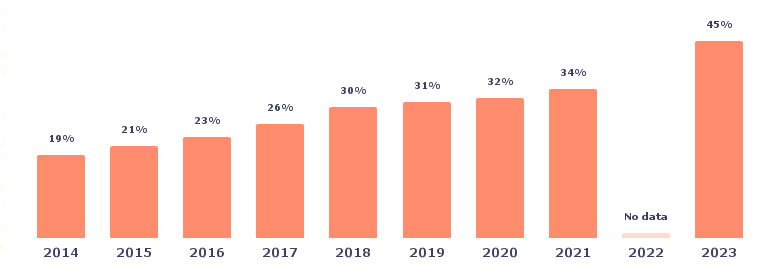
FIG. 1. AMAZON HAS TAKEN A LARGER CUT OF SELLERS’ REVENUE IN EACH OF THE LAST 10 YEARS
For every $100 in sales sellers earn, Amazon takes $45 in fees
Without immediate legislation to rein in unchecked corporate concentration and stop anticompetitive conduct, troubling trends will continue:
- Consumers will pay higher prices for digital goods. When dominant platforms control the digital marketplace, they can impose escalating fees on businesses. These costs, in turn, get passed directly to families. Amazon’s seller fees now exceed 50% of each sale, leading 65% of sellers to raise prices. Food delivery platforms charge restaurants 15–30% of every order, and consumers bear the cost: on average, delivery orders cost nearly 80% more than picking up the same meal.
- Small businesses will continue to be exploited by platforms that act as both marketplace and competitor. A single company that controls access to customers can copy products, manipulate search results, and corner businesses into extractive programs. Through its “Buy for Me” feature, Amazon is scraping product listings from small business websites without consent, creating duplicate listings under its own AI-generated images and descriptions, and telling owners they can “opt out” of a program they were never asked to join.
- Corporate concentration in tech will suppress workers’ wages—even as companies report record profits. When one company dominates the labor market, wages fall. Big Tech has exploited its dominance repeatedly: from 2005 to 2009, Apple, Google, and other Big Tech companies ran a secret no-poach scheme that cost over 64,000 California workers an estimated $3.1 billion in lost wages. Today, Amazon, the nation’s second-largest private employer, uses its dominance in local labor markets to pay warehouse workers near its fulfillment centers $822 per month less than warehouse workers elsewhere.
The next generation of California startups will be killed before they can compete. Dominant tech corporations control the data, platforms, and distribution channels new businesses need—positioning themselves to favor their own products, and acquire or crush potential rivals before they gain a foothold. Investors already refuse to fund startups that might challenge Big Tech, what researchers call “kill zones.”
The COMPETE Act would restore fair competition by holding single dominant firms accountable for harmful conduct by:
- Closing the single-firm loophole by making it clear that anticompetitive conduct by a monopoly is just as illegal as collusion by multiple companies.
- Holding gatekeepers accountable by prohibiting a single firm from restraining trade, such as when a dominant platform blocks competitors from reaching customers, or uses its power in one market to squeeze out rivals in another.
- Protecting workers and suppliers by explicitly covering monopsony—when a dominant buyer uses its market power to suppress wages or squeeze the businesses that sell to it. When a handful of companies control the market for buying creative work, they can drive down compensation even as their own profits grow.
- Giving California independence from weak federal precedents by making clear that federal court decisions are not binding on California courts.
- Removing artificial evidentiary hurdles by clarifying for judges what is not required to prove an antitrust violation, allowing courts to reach the merits of cases instead of relying on technical dismissals.